
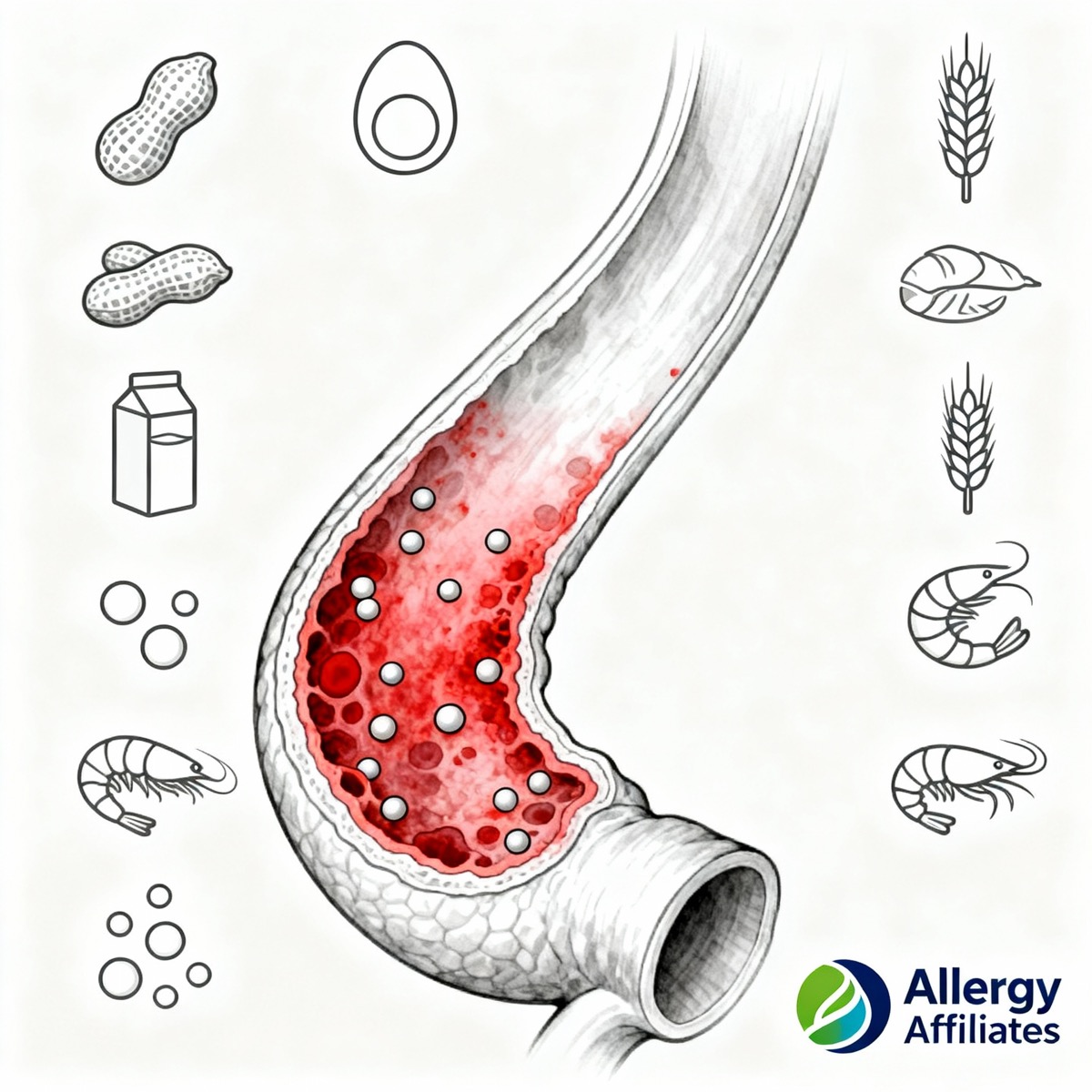
Eosinophilic Esophagitis (EoE) is a chronic allergic inflammation of the esophagus—the tube that carries food from the mouth to the stomach. It occurs when certain foods or environmental allergens trigger the immune system, leading to an abnormal build-up of eosinophils (a type of white blood cell) in the esophageal tissue. Over time, this inflammation can cause the esophagus to become stiff and narrow, resulting in difficulty swallowing and food impaction.
Symptoms to Watch For
Patients with EoE often describe food getting stuck in the throat or difficulty swallowing. They may eat slowly, take small bites, and drink water frequently during meals. In severe cases, food may become completely lodged, requiring emergency room intervention to remove it.
Common symptoms include:
- Difficulty swallowing (especially solid foods)
- Chest discomfort or food impaction
- Heartburn or reflux-like symptoms
- Slow eating and frequent sipping of water during meals
How Is EoE Diagnosed?
Diagnosis is confirmed by performing an upper endoscopy with biopsy. The tissue sample is examined under a microscope, and the presence of 15 or more eosinophils per high-power field (HPF) confirms EoE. Because EoE can mimic acid reflux, it’s essential to consult an allergy specialist who can help distinguish between these conditions and identify potential allergic triggers.
Causes and Triggers
EoE can be caused by both food and environmental allergens. Common food triggers include milk, wheat, soy, eggs, and nuts. Environmental triggers such as pollen, dust mites, and molds can also play a role. At Allergy Affiliates, Dr. Geetika Sabharwal helps patients identify their triggers through detailed allergy testing and elimination strategies.
Treatment Options
If the specific trigger cannot be identified, several evidence-based treatments are available to control inflammation and prevent progression:
- Proton Pump Inhibitors (PPIs): Reduce acid production and help with esophageal healing.
- Swallowed Topical Steroids: Medications such as fluticasone or budesonide are swallowed to coat the esophagus and reduce inflammation.
- Biologic Therapy (Dupixent): Dupilumab is an injectable medication that targets allergic pathways in EoE. It can be self-administered weekly at home.
- Allergy Immunotherapy: Allergy shots aimed at environmental triggers can reduce overall allergic sensitivity and improve EoE symptoms in select patients.
Why Early Treatment Matters
If left untreated, EoE can lead to scarring, strictures, and in rare cases, perforation of the esophagus. Early diagnosis and treatment not only prevent these complications but also significantly improve swallowing function and overall quality of life.
Compassionate, Personalized Care in Bradenton
At Allergy Affiliates, our mission is to help patients eat comfortably and live confidently. Dr. Sabharwal and her team combine expert diagnosis with personalized allergy care to find the root cause of inflammation. Many of our team members and family members have personally experienced allergies, and we understand the challenges chronic allergic conditions can cause.
Ready to Find Answers?
If you or your loved one experiences difficulty swallowing, food getting stuck, or unexplained reflux, schedule an appointment at Allergy Affiliates in Bradenton. With accurate diagnosis and a tailored treatment plan, you can enjoy food again without fear or discomfort.